

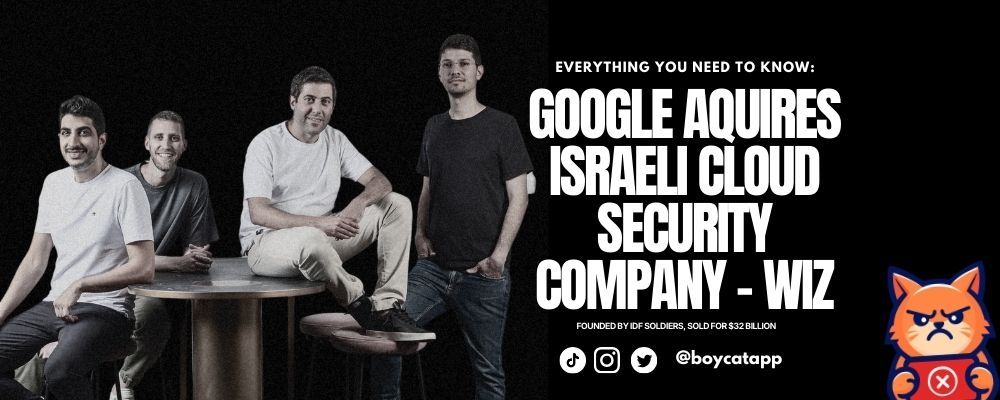
Google just acquired a cybersecurity company founded by veterans of Israel's military intelligence unit.
That company helps secure the cloud infrastructure used by banks, AI companies, startups, and governments around the world.
Most people will never hear about this deal.
But it could shape how global data is secured and who has influence over the systems that store it.
Here is what happened and why it matters.
What Happened
On March 11, 2026, Google Cloud announced that it completed its acquisition of Wiz, a rapidly growing cybersecurity company focused on cloud infrastructure protection.
Google says the goal is to strengthen its ability to protect cloud systems in the age of artificial intelligence.
Modern companies now run most of their software on cloud platforms like Google Cloud, Amazon Web Services, and Microsoft Azure.
That includes:
- financial systems
- AI models
- government platforms
- healthcare data
- messaging systems
- online commerce
Securing these environments has become one of the most important challenges in technology.
Google believes Wiz will help detect cyber threats faster and secure AI systems as companies increasingly depend on cloud infrastructure.
But there is another layer to the story that has received less attention.
Wiz was founded by veterans of Israel's military cyber intelligence ecosystem.
Key Facts About the Deal
Company acquired: Wiz
Buyer: Google Cloud
Industry: Cloud security and AI infrastructure protection
Announcement date: March 11, 2026
Founders
- Assaf Rappaport
- Yinon Costica
- Ami Luttwak
- Roy Reznik
These founders previously worked within Israel's cybersecurity ecosystem, including connections to Unit 8200, the cyber intelligence division of the Israeli Defense Forces.
What Is Unit 8200
Unit 8200 is one of the most powerful cyber intelligence organizations in the world.
It operates within the Israeli Defense Forces and focuses on:
- cyber warfare
- signals intelligence
- digital surveillance
- hacking operations
- large scale data analysis
Many Israeli technology companies were founded by veterans of this unit.
Over the past two decades, former Unit 8200 members have built dozens of cybersecurity startups that now sell technology across the world.
Supporters describe this ecosystem as proof of Israel's technological leadership.
Critics point to a different reality.
Much of the expertise developed inside Israel's cyber sector comes from intelligence and surveillance systems built during military operations and occupation.
That connection has raised ethical concerns about how technologies originally developed for intelligence purposes are later commercialized and integrated into global infrastructure.
What Wiz Actually Does
Wiz helps companies secure their cloud systems.
In simple terms, it scans cloud environments and maps how systems connect to each other.
It analyzes:
- software architecture
- internal permissions
- data flows
- cloud configurations
- potential attack paths
The platform then identifies vulnerabilities before attackers can exploit them.
Large companies rely on tools like Wiz to understand how their cloud environments are structured and where weaknesses might exist.
This type of software has become extremely valuable as businesses move their operations into complex multi cloud environments.
Why Google Wants Wiz
Cybersecurity has become a central battleground in the technology industry.
Cloud companies are competing to become the safest platform for businesses to run their systems.
Google Cloud CEO Thomas Kurian said the acquisition is meant to strengthen security as artificial intelligence expands across industries.
He explained that AI systems are increasing the complexity of modern software infrastructure and creating new security risks.
Google plans to combine Wiz with its existing security tools including:
- Google Threat Intelligence
- Google Security Operations
- Mandiant cybersecurity consulting
The goal is to create a single security platform capable of protecting cloud systems, AI models, and digital infrastructure.
Why This Matters for Everyday People
This story may sound technical, but it directly affects how the internet works.
Almost every digital service people use today depends on cloud infrastructure.
That includes:
- banking apps
- messaging platforms
- AI tools
- social media
- online shopping
- healthcare systems
- government portals
Cloud security companies operate inside these systems.
Their software scans networks, analyzes system behavior, and monitors how infrastructure operates.
In order to secure cloud environments, these platforms gain deep visibility into how digital systems are structured.
They may not access individual conversations or files, but they can observe how applications connect, how data moves through systems, and where sensitive information exists.
This is why cloud security companies hold enormous influence.
They sit inside the infrastructure that powers the internet.
The Israeli Intelligence Concern
The connection between Israeli cybersecurity companies and military intelligence has raised concerns for years.
Many of the most successful Israeli cybersecurity startups were founded by veterans of Unit 8200.
That unit has been heavily involved in intelligence gathering and surveillance technologies used by the Israeli military.
Human rights organizations have repeatedly raised concerns about how Israeli surveillance technologies have been used in the monitoring of Palestinian populations.
When companies emerging from this ecosystem become embedded in global infrastructure, critics argue that it raises serious ethical questions.
For many people around the world, especially those concerned about Palestine, the idea that technologies connected to Israel's intelligence ecosystem influences global digital infrastructure is deeply troubling and dangerous. Especially given their track record.
The concern is not simply political.
If cybersecurity systems are designed and operated by companies tied to military intelligence networks, people naturally ask who ultimately benefits from the visibility those systems provide.
Why Data Infrastructure Matters
Data has become one of the most valuable resources in the modern economy.
Companies collect enormous amounts of information through digital platforms every day.
This includes:
- personal data
- financial records
- health information
- communication metadata
- behavioral analytics
Cloud infrastructure stores and processes much of this information.
Cybersecurity platforms operate inside that infrastructure.
Their job is to defend systems from attacks, but their position inside the architecture also gives them insight into how those systems function.
This is why infrastructure decisions matter.
Once a security platform becomes embedded into a cloud ecosystem, it becomes part of the foundation that digital services depend on.
Why Privacy Tools Matter
As global cloud infrastructure becomes increasingly centralized, individuals have fewer ways to control how their data moves across the internet.
Most people cannot control the security architecture used by companies they interact with online.
But they can take steps to protect their own internet activity.
This is where privacy tools such as BuycatVPN become important.
BuycatVPN helps users:
- encrypt their internet traffic
- protect browsing activity from tracking
- secure connections on public networks
- reduce visibility into personal browsing behavior
Privacy tools do not change how large cloud systems operate.
But they give individuals an additional layer of protection in an increasingly complex digital environment.
The Bigger Picture
The Google and Wiz acquisition reflects a larger shift happening across the technology industry.
Cybersecurity is becoming one of the most strategic sectors of the AI era.
Cloud companies are racing to control the security infrastructure that protects global digital systems.
Artificial intelligence is accelerating both cyber attacks and cyber defense.
At the same time, many of the companies building these technologies come from specific geopolitical ecosystems shaped by intelligence agencies and military research.
Technology is not neutral.
It reflects the institutions that built it.
Understanding those connections is essential for anyone who cares about the future of the internet.
Why Boycat Covers Stories Like This
Boycat focuses on ethical decision making in the modern economy.
Most people think about ethics when they shop.
But ethics also exist in the infrastructure that powers technology.
Who builds the systems behind the internet matters.
Where those companies come from matters.
And how technology intersects with politics, security, and human rights matters.
Understanding these systems is part of building a more ethical digital future.
Explore Ethical Alternatives
Boycat helps people align their spending with their values.
The Boycat app allows users to:
- scan products
- research companies
- discover ethical alternatives
Buycat is building the next step.
A marketplace focused on ethical brands and responsible companies.
And BuycatVPN helps users protect their privacy online.
Learn more:
Boycat
https://boycat.io
Buycat
https://buycat.com
BuycatVPN
https://buycatvpn.com
Sources
Google Cloud Blog
https://cloud.google.com/blog
Google Cloud announcement
Welcoming Wiz to Google Cloud
Wiz official website
https://wiz.io
IDC cloud security research commentary
Deloitte cybersecurity commentary
Public reporting on Israel's cybersecurity ecosystem and Unit 8200